At Risk of Paralysis, Rejected by Multiple Countries: Algerian Man Finds Hope in China as 5‑Hour Surgery Removes Rare Spinal Tumor
"Operation was a huge success. I can finally walk on my own!"
Salim, a patient from Algeria in North Africa, beamed with joy as he showed off his steady, strong gait to everyone in the international ward of ZJU4H. This was a moment he had been longing for – for two full years.
For the past two years, a rare spinal hemangioma had been like a “hidden bomb” in his nerves, gradually numbing his legs and causing him to limp. He had sought treatment in Turkey, France, and even consulted experts in China – but was turned away each time because surgery was deemed “extremely risky” and could leave him paralysed.
At his wit’s end, Salim placed his last hope in Yiwu, China – thousands of miles away. The neurosurgery team at ZJU4H, with their exceptional skill and courage, successfully defused that bomb.
A Mysterious Illness, Repeated Rejections
In 2024, Salim suddenly developed pain on the right side of his body. At first he thought it was just fatigue, but the pain worsened, his right‑side strength declined, and he began to limp. His left leg also gradually lost sensation. He was diagnosed with a spinal cavernous haemangioma – a vascular malformation inside the spinal cord that slowly bleeds over time, damaging surrounding nerves.
Over the past year, his condition deteriorated, and he was warned that any sudden bleeding could cause paralysis. Despite consulting doctors in multiple countries, no one could offer a safe surgical solution – they only told him that his condition would worsen and he might eventually become bedridden.
A Long‑Distance Search for Hope
Just as Salim was about to give up, his nephew – who runs a business in Yiwu – brought news: the neurosurgery department at ZJU4H had extensive experience in spinal tumour surgery. With one last glimmer of hope, Salim travelled all the way from Algeria to Yiwu.
After thorough imaging and clinical evaluation, the team diagnosed him with a cavernous haemangioma at the C2 cervical segment – an extremely high‑risk location, right next to the medulla oblongata (the brainstem centre that controls breathing and heart rate). The surgery space was tiny, surrounded by critical nerves and blood vessels. Even a minor mistake could lead to respiratory paralysis or permanent paraplegia.
Under the guidance of Department Director Chen Yili, the team meticulously planned a customised surgical strategy and contingency measures. "The doctors explained everything clearly – both the condition and the treatment plan. They gave me new hope," Salim said. He decided to stay and undergo the procedure.
A 5‑Hour Battle, a Lifesaving Outcome
On the day of surgery, after extensive preparation, the team led by Dr. Ou Changjiang, Dr. Cao Lintian, and Dr. Wu Chunlai – under Director Chen’s supervision – successfully dissected and completely removed the cavernous haemangioma from the C2 spinal cord. The operation lasted five hours.
Salim returned to his ward safely, with no major neurological damage. The heavy burden on his heart was finally lifted.
Post‑operative recovery went smoothly. The neurosurgical team, nurses, and rehabilitation therapists designed a personalised programme covering wound care, limb training, diet, and emotional support. Two weeks later, Salim was discharged with good right‑leg strength and stable gait – though slightly slow. His nephew later reported that after three weeks of formal rehabilitation, Salim walked almost normally, and his limb pain had completely disappeared.
Overjoyed with his new lease on life, Salim sent a short but heartfelt thank‑you message to the neurosurgery team:
"Thank you so much doctor, all the family saying to you thank you and pray for you to get the best and all the good things you desire in life."
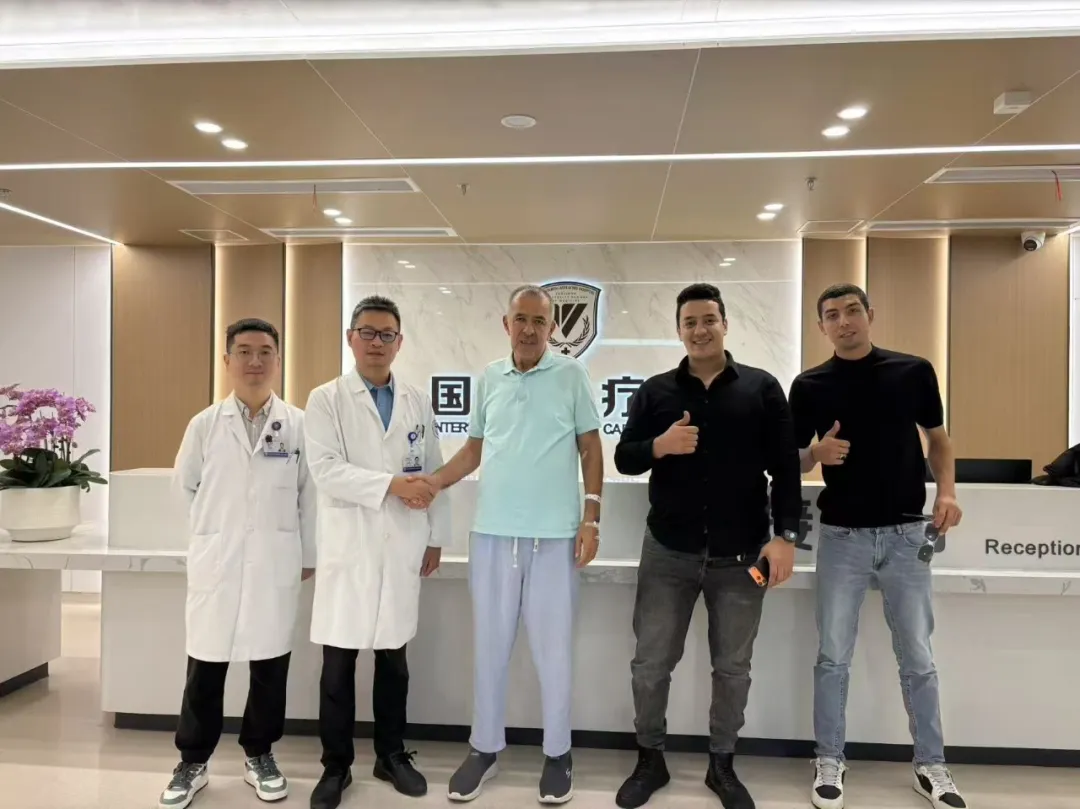
This journey across thousands of miles, from Algeria to Yiwu, ended with a perfect resolution at ZJU4H. Wherever patients come from, the hospital remains committed to using its finest medical skills and warmest care to protect every patient’s health and trust.