A 30,000-li flight, all for a single act of trust! A handsome young man, unable to stand due to back pain, rushed straight to... upon returning home.
In a ward at the Fourth Affiliated Hospital of Zhejiang University’s Department of Orthopedics, Mr. Sun, who was about to be discharged, held Vice President Ma Jianjun’s hand and spoke with deep emotion: “I flew for 30 hours, traveling 30,000 li from Africa to Beijing, then connecting to a flight to Yiwu. After undergoing this surgery, I feel it was absolutely worth it! Now I can walk with ease—I don’t feel any pain at all.”
Who would have thought that just a few days ago, he was still unable to take a single step due to excruciating lower back pain? This journey across mountains and seas in search of medical treatment ultimately allowed him to bid farewell to his pain and regain the freedom to walk, all thanks to the superb minimally invasive techniques at Zhejiang University Fourth Hospital.
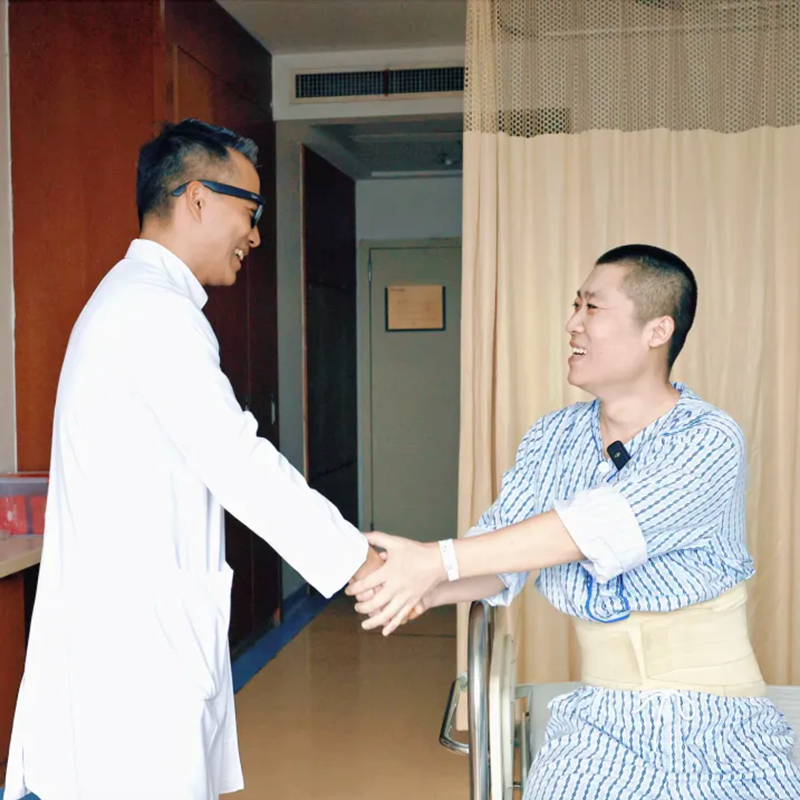
As a technician stationed overseas year-round, Mr. Sun’s workload is extremely heavy. Sitting for long periods while debugging equipment and pulling all-nighters to tackle challenging projects are a regular part of his life, and his lower back has long been unable to bear the strain. Mr. Sun recalled that during this episode, he was completely unable to stand or walk; he could only shuffle back to camp inch by inch while leaning on a stool, and was unable to take care of daily tasks such as getting dressed or using the restroom on his own. He had only one thought in mind: to find a reliable doctor as soon as possible and cure this condition!
In his moment of despair, he drew on his technical background and thorough research skills to collect and analyze a large number of recovery case studies online—patients who had also suffered from lumbar spine conditions and, after receiving treatment from Vice President Ma Jianjun’s team at the Fourth Affiliated Hospital of Zhejiang University, had successfully overcome their pain and regained their normal lives. Clinging to his last shred of hope, he resolutely decided to return to China despite his illness and fly directly from Beijing to the completely unfamiliar city of Yiwu.
After examining him, Ma Jianjun first conducted a comprehensive series of tests. Based on Mr. Sun’s medical history and symptoms, he made a definitive diagnosis of severe lumbar disc herniation complicated by endplate inflammation. Due to the recurrence of the condition and prolonged nerve compression, significant nerve damage had already set in.
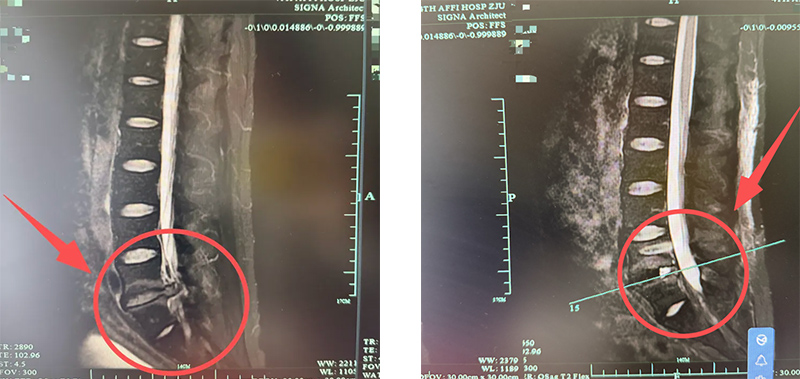
“Mr. Sun has a severe lumbar disc herniation that is compressing his nerves, combined with significant endplate inflammation. The combination of these two conditions is far more dangerous than either condition alone and, in severe cases, can lead to weakness in the lower limbs, urinary and bowel dysfunction, or even paralysis.”
Vice President Ma Jianjun explained that Mr. Sun had previously undergone a lumbar endoscopic surgery at a major hospital, and his current condition represents a sudden recurrence. This significantly increases the difficulty of revision surgery. Traditional open surgery carries risks such as extensive trauma, heavy bleeding, and slow recovery, and can easily exacerbate tissue adhesions. Considering his age and work requirements, the team decided to perform a customized modified two-port minimally invasive lumbar fusion procedure—one of Ma Jianjun’s core areas of expertise.
Unlike the “open surgery” of traditional procedures, this minimally invasive technique allows for precise access through muscle gaps, maximizing protection of the spinal muscles and surrounding soft tissues. Using patented instruments invented by Ma Jianjun, the anatomical structures of the original lesion site can be clearly identified, preventing accidental nerve injury and fundamentally reducing the risk of nerve damage and postoperative recurrence.
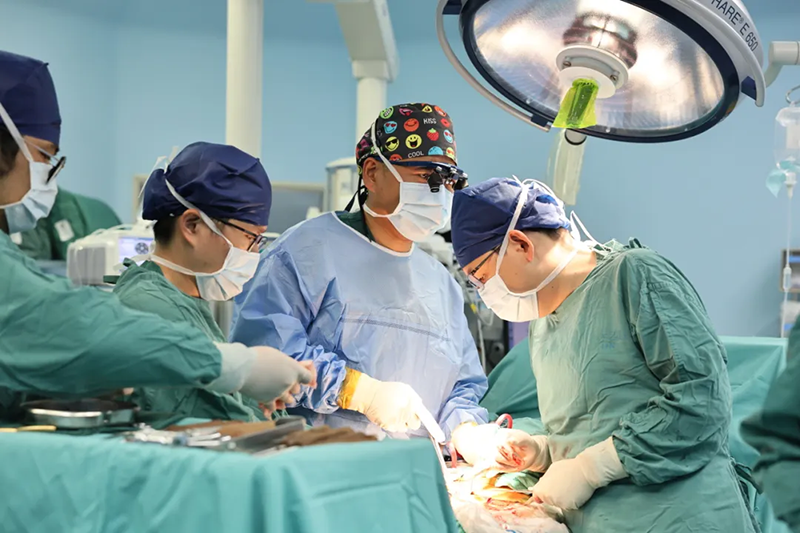
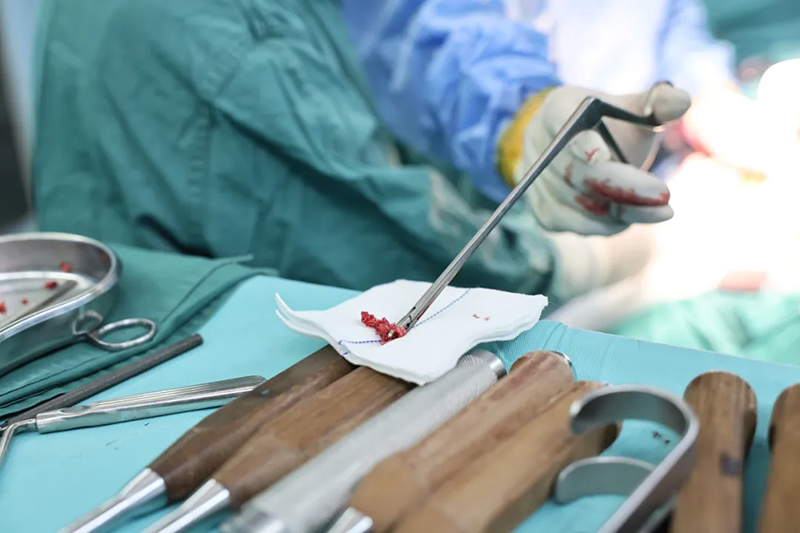
“I’m so grateful to Dean Ma! On the first day after the surgery, I felt like my healthy back was back—I’m standing up straight again, my back doesn’t hurt anymore, and my legs feel strong.” Mr. Sun admitted that before the surgery, he had braced himself for the worst; he never imagined he’d be able to walk so easily afterward. His current condition is far better than he had expected. He said happily, “I used to love running, and now I’m confident I’ll be able to take it up again.”
To date, Dr. Ma Jianjun’s team has successfully performed thousands of modified two-port minimally invasive lumbar fusion surgeries. This technique is particularly suitable for patients with lumbar spondylolisthesis, lumbar instability, or those requiring revision surgery. In addition to being minimally invasive, causing minimal blood loss, and precisely protecting nerves, patients experience very rapid functional recovery post-surgery. Even if they wish to engage in activities such as running, long jump, or even contact sports in the future, their ability to do so will remain largely unaffected.
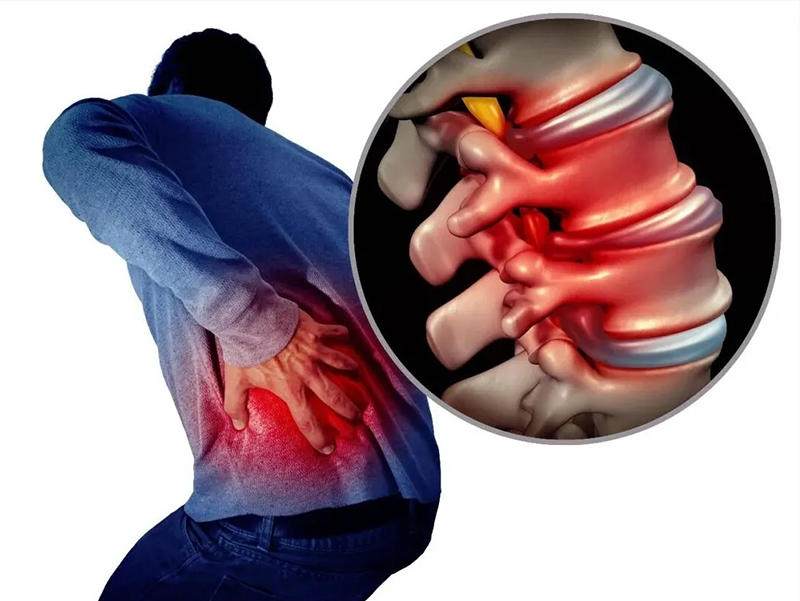
At the same time, Vice President Ma Jianjun noted that lumbar disc herniation and lumbar spondylolisthesis are common degenerative diseases of the lumbar spine. Common contributing factors include long-term, high-intensity physical labor, prolonged sitting or standing, and poor posture. Office workers and those who work outdoors for extended periods, in particular, place greater strain on their lumbar spine, putting them at higher risk of developing or experiencing a recurrence of these conditions.
In the early stages, these conditions may manifest only as lower back soreness. However, without timely intervention, they can gradually lead to numbness, pain, and weakness in the lower limbs, and in severe cases, may even result in paralysis. Therefore, if you experience lower back discomfort or related symptoms such as numbness and pain in the lower limbs, it is essential to seek medical attention promptly for diagnosis; do not delay.
Continuously Optimizing the Process for Seeking Medical Treatment in China to Build the International Appeal of Hospitals
Recently, a patient from Kazakhstan who had suffered from asthma for more than 20 years flew to Zhejiang University Fourth Hospital for treatment and has just been discharged from the Respiratory Medicine Center. Now, another female doctor from Bangladesh has traveled across borders to seek medical care here, entrusting her life to the hospital. At Zhejiang University Fourth Hospital, an increasing number of foreign patients are flocking to the hospital, drawn by its reputation. Behind this trend lies not only the high quality and efficiency of Chinese medical services but also the brand appeal of this provincial-level Class A Grade A hospital and its flagship medical disciplines, which are continuously expanding along the “Belt and Road” initiative.
Vice President Tang Zhe noted that this phenomenon reflects the remarkable progress in China’s medical technology. “In the past, we were playing catch-up; later, we kept pace with the world; now, some of our technologies are internationally leading. We should boldly showcase our technologies, methods, and expertise—as well as our domestically developed medical devices—on the international stage to bring more help to people around the world.”
In 2025, the number of outpatient visits by foreign patients at Zhejiang University Fourth Hospital exceeded 26,500, placing it among the top hospitals of its kind nationwide. From a well-developed international medical service system to increasingly streamlined cross-border medical treatment processes, the hospital addresses one key question through every detail: how to ensure that patients traveling from afar not only receive effective treatment but also experience the warmth of Chinese healthcare.
Wang Kai, Party Secretary of Zhejiang University Fourth Hospital and the “Belt and Road” International Medical College, stated that as a provincial-level Class A Grade A hospital, Zhejiang University Fourth Hospital fully leverages Yiwu’s geographical advantages to continuously optimize medical service processes for international patients, actively connect with international resources, and constantly improve the diversity of service offerings. By effectively addressing the health needs of people in countries along the “Belt and Road,” the hospital is injecting new momentum into the high-quality development of the healthcare sector. As the international medical gateway of Yiwu—a global hub for commerce and trade—the hospital is gradually building a brand that attracts international patients and is striving to become a destination hospital for countries along the “Belt and Road” route.