With the tumor right next to her heart and adjacent to major blood vessels... A Bangladeshi doctor burst into tears after being diagnosed with liver cancer and sought treatment abroad, eventually finding her way to Zhejiang University Fourth Hospital.
In January 2026, Tovida Tasnim, a 31-year-old female doctor from Bangladesh, was diagnosed with liver cancer. Just two months later, she received her PET-CT results and discovered that the number of tumors in her liver had increased to five, all in extremely dangerous locations—one near her heart and another right next to the inferior vena cava.
Staring at the report, she was lost in thought, her hands trembling. Her husband, also a pediatrician, knew better than anyone what this meant. If the tumors continued to grow and compress the inferior vena cava—the body’s largest blood vessel and the lifeline that returns blood to the heart—severe swelling in the lower limbs would result, and the condition could even become life-threatening.
They sought medical treatment in Bangladesh and Singapore, only to be told that “surgery was not an option.” Just as they were at their wits’ end, their mentor—Professor Mizanur Rahman, Director of Surgery at the National Cancer Center of Bangladesh—suggested they seek out Professor Tang Zhe, a liver cancer specialist in China.
A WeChat Message Sent to China
Behind this lies a touching story. Last August, Professor Tang Zhe, Vice President of Zhejiang University Fourth Hospital and Director of the General Surgery Center, was invited to the National Cancer Center of Bangladesh. There, he broadcast three highly complex surgeries live across the country—marking the first time liver cancer ablation procedures had been performed in Bangladesh. One of these procedures, an ablation for liver cancer in a high-risk area, gave a patient who had been prepared to give up on treatment a new lease on life, leaving a deep impression on the Bangladeshi colleagues present.
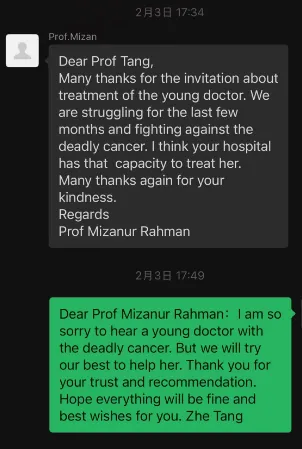
So Professor Mizanur sent a message to Tang Zhe asking for help. “We’ve been struggling for the past few months to help this young female doctor fight her deadly cancer. I believe your hospital has the capability to treat her.”
Tang Zhe carefully examined the imaging data he received, paying particular attention to the tumors in those two high-risk areas. He was the first doctor in Zhejiang Province to perform ablation surgery for liver cancer; he had performed over 10,000 ablation procedures and, together with his research team, had developed a domestically produced ablation needle, using it to perform several thousand ablation surgeries for high-risk liver cancer. He replied promptly: “We will do our utmost to help her, and we hope everything will turn out well.”
A Journey of a Thousand Li in Search of Medical Care: Chinese Doctors Accept a “Matter of Life and Death”
For cross-border medical treatment, obtaining a visa is the first hurdle. Staff at the International Office of Zhejiang University Fourth Hospital issued a formal appointment letter based on the imaging data and the doctor’s diagnostic analysis she provided, to facilitate their visa application. “I was very anxious at the time,” Tovida later recalled. “I didn’t know if I would be able to come to China smoothly, nor did I know if my hopes would be dashed once I arrived.”
On February 28, Tovida and her husband departed from the capital, Dhaka, and arrived in Yiwu late at night after a layover in Guangzhou. The next morning, thanks to the meticulous arrangements made by the staff, they were smoothly admitted to the International Medical Department of Zhejiang University Fourth Hospital and completed their preoperative examinations that same day.
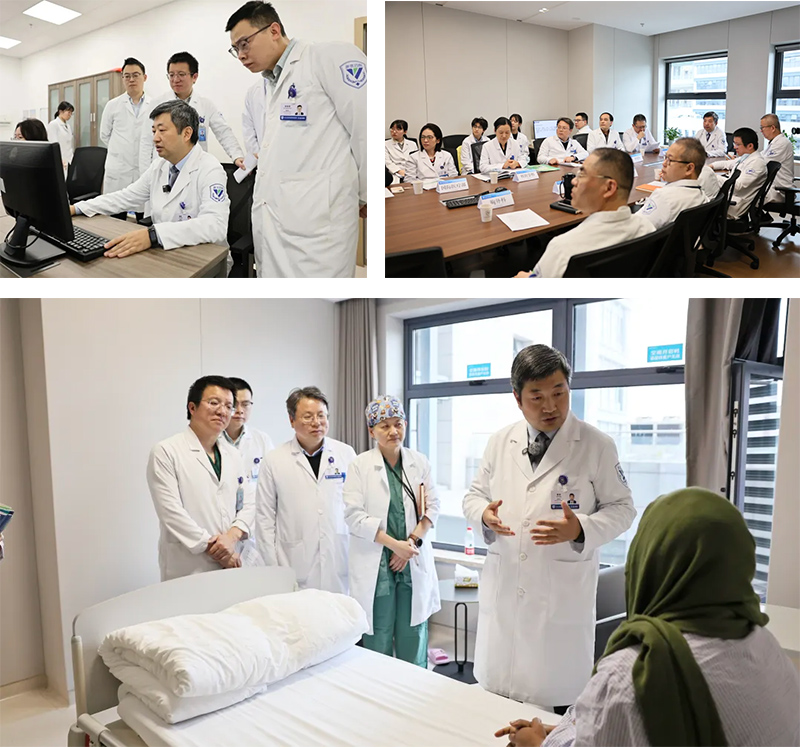
Early the next morning, Tang Zhe led the rounds. Subsequently, the hospital organized a hospital-wide multidisciplinary team (MDT) discussion on complex cases. The discussion covered everything from localized tumor treatment to systemic anticancer regimens; it addressed high-risk complications associated with surgery—such as massive hemorrhage and air embolism—and extended to the design of surgical plans and comprehensive perioperative management... Experts from more than a dozen departments—including General Surgery, Oncology, Thoracic Surgery, Anesthesiology, Radiology, Nuclear Medicine, and Pathology—came together to discuss the case and develop a comprehensive, full-cycle anticancer treatment plan and a personalized surgical plan for her.
Before the surgery, Tovida finally asked the question that had been weighing on her heart: “The surgery is very difficult—will it hurt me? I’m a little scared.” Tang Zhe replied with confidence and composure: “This location is indeed very dangerous, but I’ve performed several thousand such high-risk surgeries—everything will be fine.”
At noon on March 3, the surgery—which had captured the attention of doctors in both countries—began.
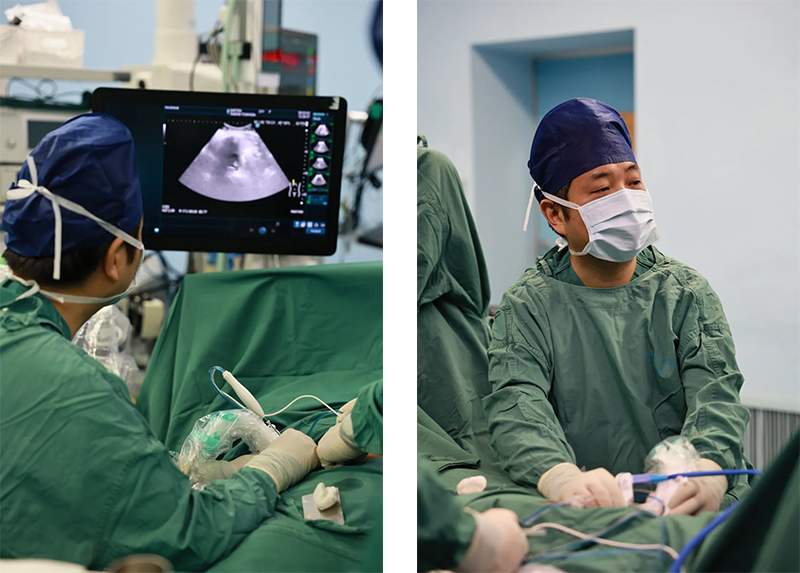
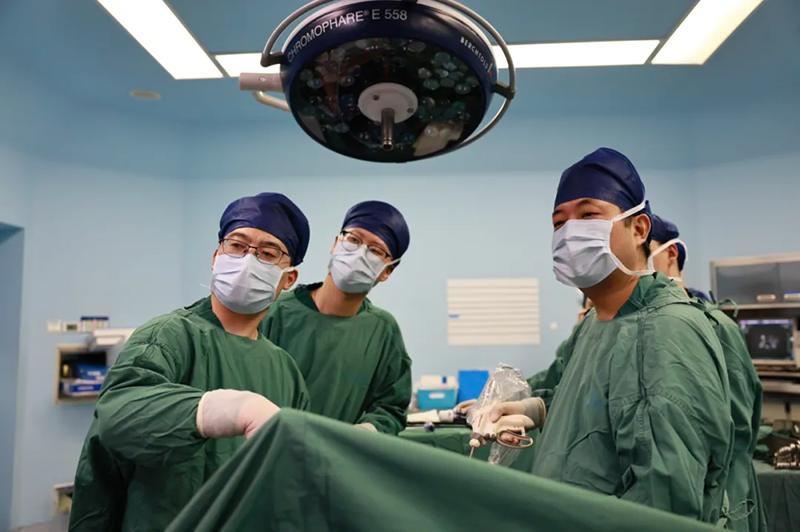
The surgery was performed by Tang Zhe’s team and consisted of two main steps: first, ablation, which used high heat to “destroy” multiple tumors on the surface of the liver, particularly a 4-centimeter liver cancer adjacent to the inferior vena cava—a method that causes no bleeding and is minimally invasive. After this step was successfully completed, a laparoscope was used to precisely remove the high-risk tumor near the heart, and tissue samples were collected for testing to guide subsequent treatment.
As soon as the surgery ended, Tang Zhe saw a WeChat message from Professor Mizanur—doctors in a distant country were also anxiously awaiting the results. He replied briefly: “The surgery went smoothly, all lesions were eliminated, and there was no bleeding during the procedure.”
That same afternoon, Tovida was returned to her ward. Tovida’s husband had been waiting outside the operating room for over two hours; upon learning that the surgery had gone smoothly and there had been almost no bleeding, he was both delighted and astonished. “Liver cancer ablation is an advanced surgical technique, but it hasn’t been performed in Bangladesh yet. Fortunately, Professor Tang came to perform a demonstration surgery, which is how we learned of this opportunity.”
After the surgery, Professor Wang Kai, Party Secretary of the Fourth Affiliated Hospital of Zhejiang University and the International Medical College, made a special visit to her hospital room. “I had thought I had reached a dead end, but I never expected to find a way forward here in China,” said Tovida. She noted that she was recovering well and expressed her gratitude to Dr. Tang Zhe’s team for their exceptional skills, as well as to the entire medical staff for their outstanding professionalism and attentive care. Even the hospital’s nutrition cafeteria was able to provide customized halal meals, which made their journey to seek medical treatment in a foreign country feel all the more heartwarming.
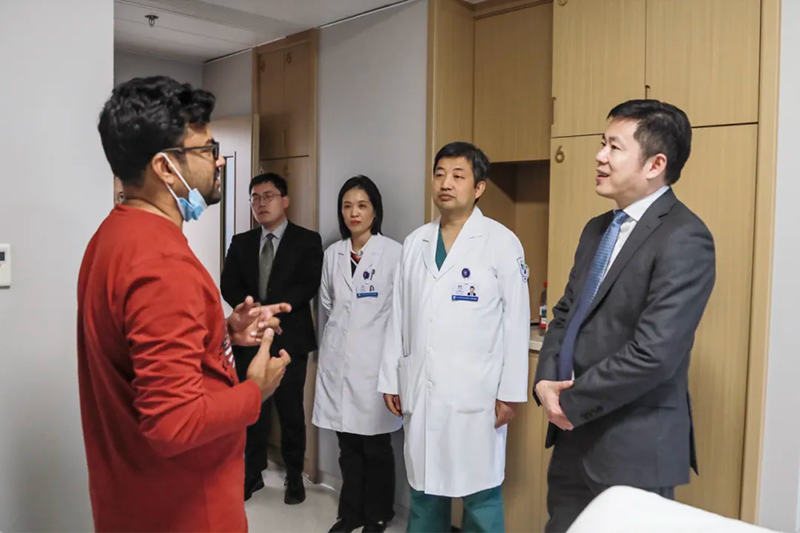
During his hospital stay, Tovida and his husband took a tour of the facility. Upon seeing equipment such as the Da Vinci surgical robot and linear accelerator, they repeatedly marveled: “Every piece of technology I’ve seen—from something as small as a single-lumen IV catheter or an indwelling IV needle to every tool the nurses use to monitor my vital signs—is cutting-edge.”
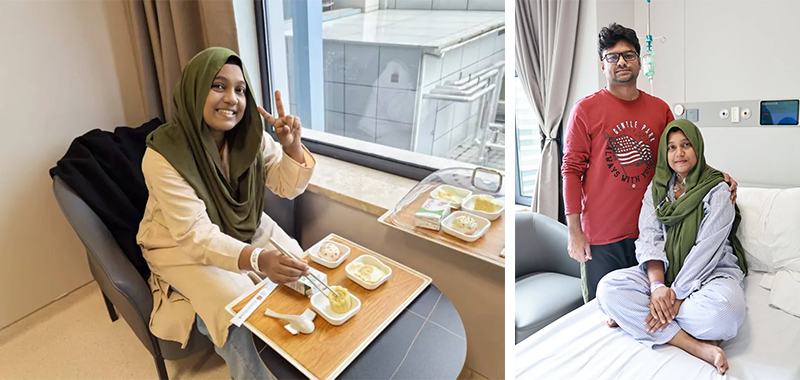
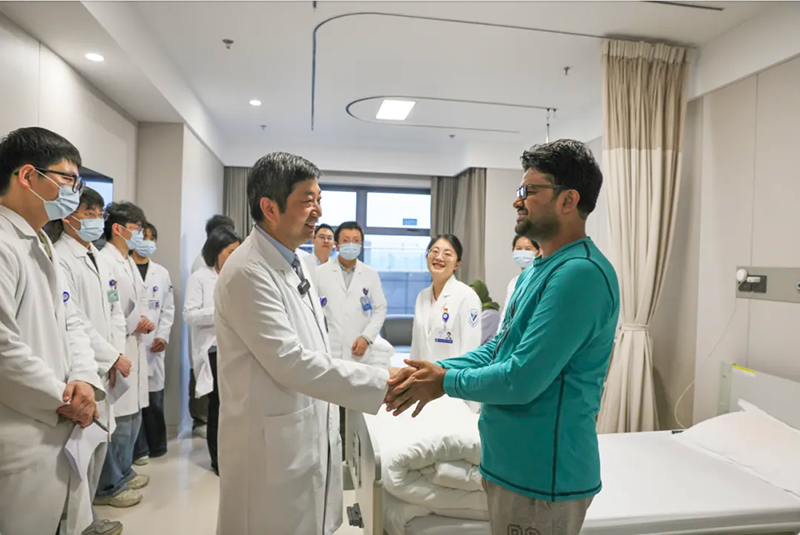
As her discharge approached, during Tang Zhe’s rounds, Tovida’s husband asked a question that took everyone present by surprise. “Professor Tang, could I apply to be your graduate student?” This visit had not only relieved his wife’s suffering but also opened up a new path for him. Zhejiang University ranks among the top three universities in China. In Yiwu, Zhejiang, there is not only the Fourth Affiliated Hospital but also the “Belt and Road” International Medical College, which offers a comprehensive international medical education curriculum... A seed of academic aspiration was beginning to sprout.
Continuously Optimizing the Process for Seeking Medical Treatment in China to Build the International Appeal of Hospitals
Recently, a patient from Kazakhstan who had suffered from asthma for more than 20 years flew to Zhejiang University Fourth Hospital for treatment and has just been discharged from the Respiratory Medicine Center. Now, another female doctor from Bangladesh has traveled across borders to seek medical care here, entrusting her life to the hospital. At Zhejiang University Fourth Hospital, an increasing number of foreign patients are flocking to the hospital, drawn by its reputation. Behind this trend lies not only the high quality and efficiency of Chinese medical services but also the brand appeal of this provincial-level Class A Grade A hospital and its flagship medical disciplines, which are continuously expanding along the “Belt and Road” initiative.
Vice President Tang Zhe noted that this phenomenon reflects the remarkable progress in China’s medical technology. “In the past, we were playing catch-up; later, we kept pace with the world; now, some of our technologies are internationally leading. We should boldly showcase our technologies, methods, and expertise—as well as our domestically developed medical devices—on the international stage to bring more help to people around the world.”
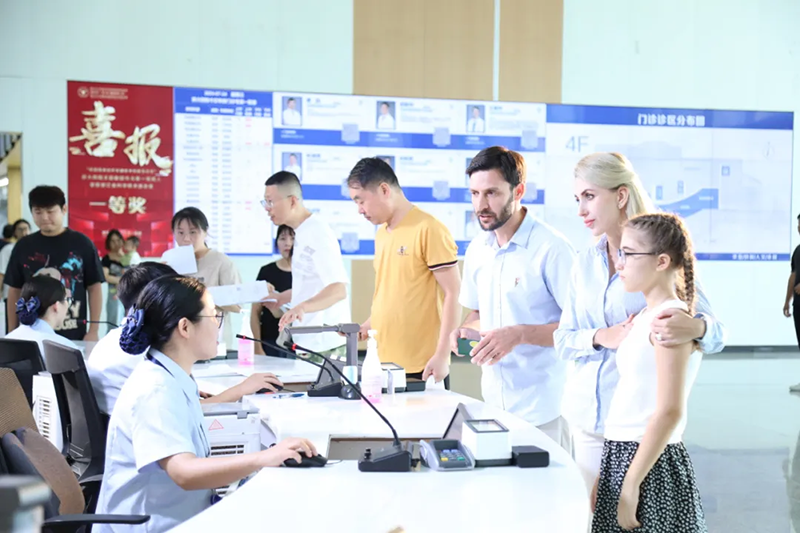
In 2025, the number of outpatient visits by foreign patients at Zhejiang University Fourth Hospital exceeded 26,500, placing it among the top hospitals of its kind nationwide. From a well-developed international medical service system to increasingly streamlined cross-border medical treatment processes, the hospital addresses one key question through every detail: how to ensure that patients traveling from afar not only receive effective treatment but also experience the warmth of Chinese healthcare.
Wang Kai, Party Secretary of Zhejiang University Fourth Hospital and the “Belt and Road” International Medical College, stated that as a provincial-level Class A Grade A hospital, Zhejiang University Fourth Hospital fully leverages Yiwu’s geographical advantages to continuously optimize medical service processes for international patients, actively connect with international resources, and constantly improve the diversity of service offerings. By effectively addressing the health needs of people in countries along the “Belt and Road” route, the hospital is injecting new momentum into the high-quality development of the health sector. As the international medical gateway of Yiwu—a global hub for commerce and trade—the hospital is gradually building a brand that attracts international patients and is striving to become a destination hospital for countries along the “Belt and Road” route.