After 35 rounds of chemotherapy for liver metastases from colon cancer, he refused to give up. He received precision surgery in China and achieved his goal of tumor-free survival.
Al-Bari (a pseudonym), a 60-year-old Moroccan man, never imagined that he would achieve his goal of being “no evidence of disease” (NED) in Yiwu, China—tens of thousands of miles away.
This colon cancer patient, after undergoing open surgery at a local hospital in Africa and 35 rounds of chemotherapy, developed multiple metastatic tumors in his liver. Faced with advanced-stage cancer and the dilemma that “surgery was possible but could not be performed locally,” he resolutely chose to travel to China and seek his last hope at the Fourth Affiliated Hospital of Zhejiang University School of Medicine.
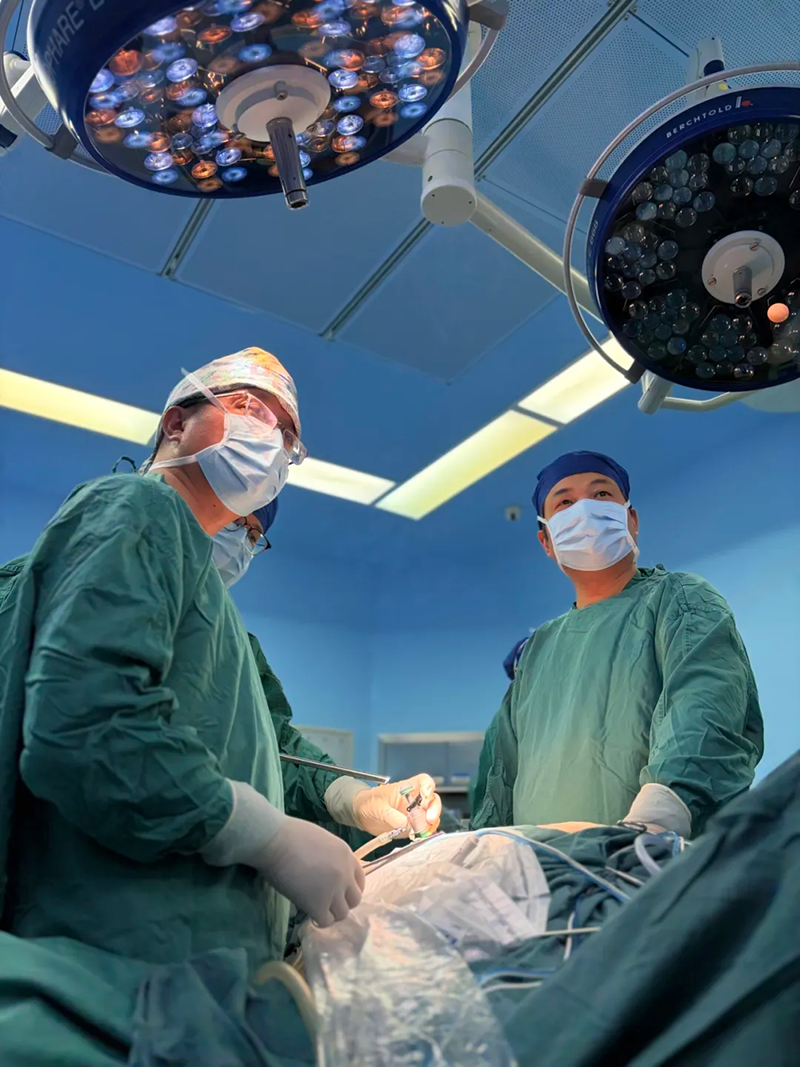
On March 19, in an operating room at Zhejiang University Fourth Hospital, a special laparoscopic liver cancer resection combined with ultrasound-guided radiofrequency ablation was successfully performed. The procedure was led by Vice President and Director of the General Surgery Center, Chief Physician Tang Zhe, and his team.
The patient’s daughter, who had been anxiously waiting outside the operating room, finally breathed a sigh of relief upon hearing that there had been “virtually no bleeding.” Postoperatively, the elderly patient recovered well and was discharged on the fifth day following the procedure.
The “Enemy” Hidden Deep Within the Liver
In 2024, Al-Bari was diagnosed with colon cancer and underwent surgery to remove the tumor. However, the disease did not go away. Since then, he has required long-term chemotherapy to control the progression of multiple liver metastases.
“During chemotherapy, the patient developed drug resistance, and metastases appeared in his liver. Two of these tumors were hidden deep within the liver, in relatively high-risk locations. ” Tang Zhe explained that while doctors in Africa had determined it would be best to remove all the tumors from the liver, they were unable to perform the procedure due to limitations in technology and equipment.
The elderly man’s daughter, who runs a business in Yiwu, was frantic with worry upon learning of her father’s condition and immediately decided to arrange for him to come to China for treatment. “He underwent 35 rounds of chemotherapy, which took a heavy toll on him. My brother, who is a doctor, told me that if there was a chance, we should opt for surgery, so we came to China,” the patient’s daughter recalled.
In March 2026, El Bari arrived at the Department of Oncology at the Fourth Affiliated Hospital of Zhejiang University. Upon admission, he underwent a PET-CT scan to screen for tumor metastases throughout his body. Fortunately, the results showed no metastases in other parts of his body at that time. Compared to previous imaging, three low-density lesions with increased metabolic activity were observed in the liver, indicating that the tumor remained active.
A Single Needle Pierces the “Rotten Core”
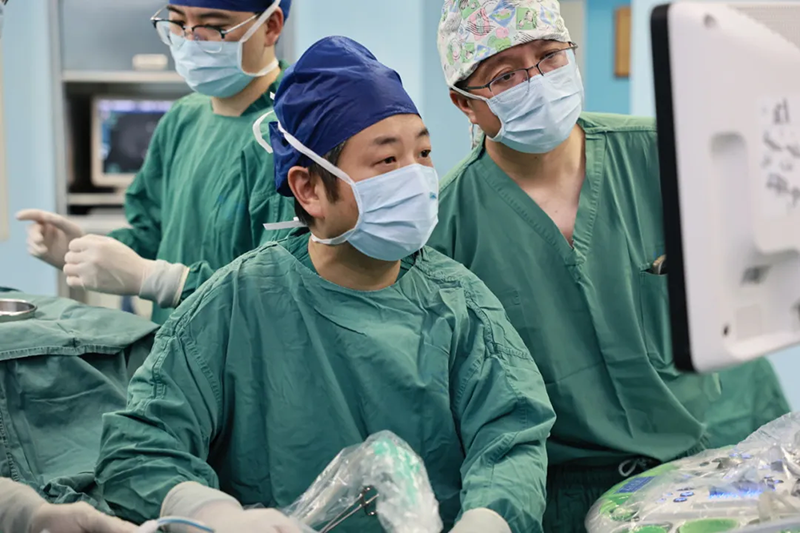
In response to the strong desire for surgery expressed by the patient and his family, the hospital quickly organized a multidisciplinary team (MDT) consultation involving the Oncology Department and the General Surgery Department. After thorough discussion and analysis, the team decided to perform surgery on the detected liver mass. By carefully cross-referencing previous test results and combining MRI and intraoperative ultrasound findings, Tang Zhe identified a total of four metastatic lesions in segments IV, VII, and VIII of the liver. Among these, the management of the deep-seated tumor was somewhat controversial.
“The traditional approach involves mobilizing the entire liver, resecting all surrounding ligaments, and then performing laparoscopic resection of deep liver tumors, which is quite invasive for the patient,” Tang Zhe explained. He led his team in adopting a combined strategy of “laparoscopic resection plus radiofrequency ablation”: performing complete laparoscopic resection of the superficial tumors, while using ultrasound-guided radiofrequency ablation to precisely “burn away” the deep-seated tumors.
“Deep tumors are like the rotten core of an apple; removing them requires cutting out a lot of the apple’s flesh, which is very harmful to the patient. Radiofrequency ablation involves directly inserting the probe to destroy the lesion without damaging any surrounding tissue at all,” Tang Zhe said, using a vivid analogy to illustrate the advantages of this technique.
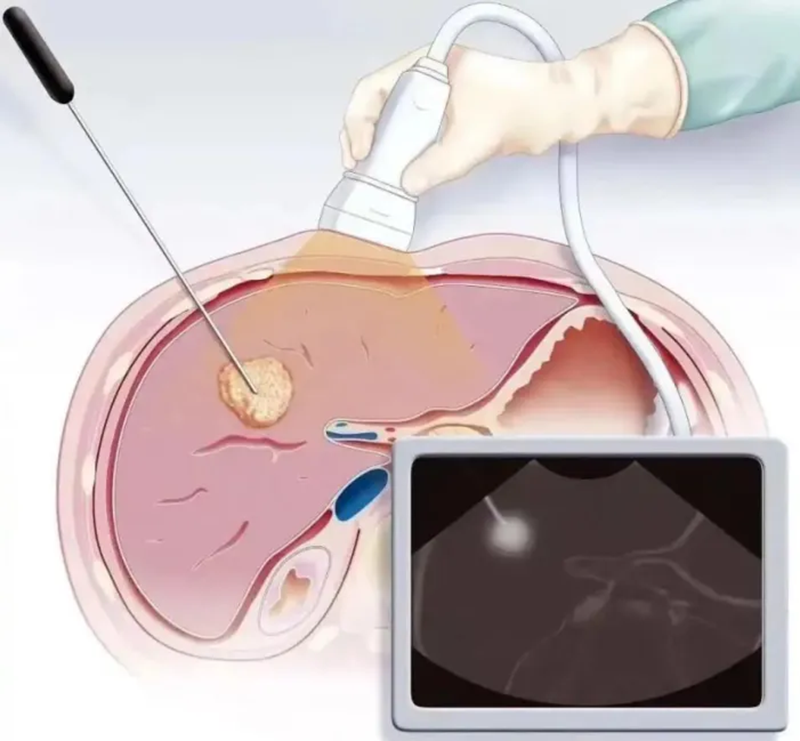
Radiofrequency ablation: An electrode needle is inserted into the lesion area of a liver tumor, where the temperature instantly rises to over 100°C, effectively “cooking” the liver tumor to destroy the tumor cells.
As Chair of the Tumor Ablation Therapy Specialized Committee of the Zhejiang Anti-Cancer Association, Deputy Head of the Expert Group on Standardized Training in Tumor Ablation Therapy of the Chinese Medical Doctor Association, and Deputy Editor-in-Chief of the *Textbook on Standardized Training in Tumor Ablation Therapy* published by People’s Medical Publishing House, Tang Zhe participated in the formulation of the National Technical Management Standards for Tumor Ablation Therapy and led the development of the “National Tumor Ablation Case Reporting System.”
Internationally, radiofrequency ablation is currently recognized as one of the three primary curative methods for liver tumors, alongside surgical resection and liver transplantation. Particularly for small liver cancers and liver metastases, its efficacy is comparable to that of surgical resection, but it is less invasive and allows for a faster recovery.
Tang Zhe explained that this technique is suitable for patients whose medical condition permits treatment but who are in poor physical condition, or who have undergone multiple surgeries and cannot tolerate further procedures. For liver tumors measuring less than 3 centimeters in diameter and with no more than three lesions, radiofrequency ablation is recommended by international guidelines as a curative treatment.
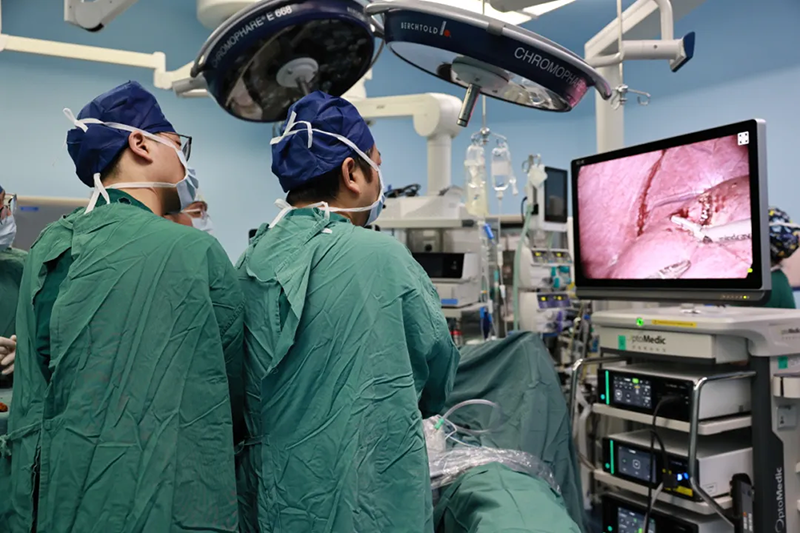
The entire surgery took less than three hours. Immediately after the procedure, Tang Zhe stepped out of the operating room to speak with the patient’s daughter, who had been waiting anxiously. “We successfully removed all four liver tumors discovered during the surgery. There was virtually no bleeding, so you can rest assured.”
Hearing this, the patient’s daughter finally let out a sigh of relief. She admitted that she had chosen China and Zhejiang University Fourth Hospital because of their advanced medical technology and, in particular, their international-standard medical services. “I run a business in Yiwu, and I know that China’s medical care and medications are excellent, and the doctors are very internationally oriented. All the doctors and nurses can communicate in English, which is very convenient.”
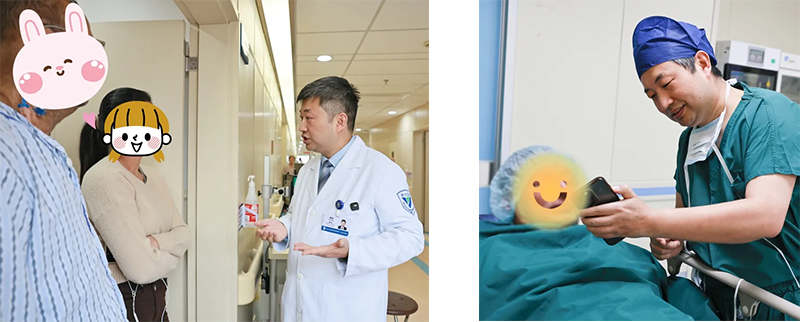
Tang Zhe noted that, for this Moroccan patient, while chemotherapy is an important systemic treatment, achieving “no evidence of disease” (NED) is the key treatment goal when localized metastases are present in the liver.
“We used radiofrequency ablation to treat the liver tumors, achieving NED and the complete elimination of all tumor lesions. A postoperative MRI was performed, and we will continue to monitor the patient; barring any unusual circumstances, further chemotherapy will not be necessary.”
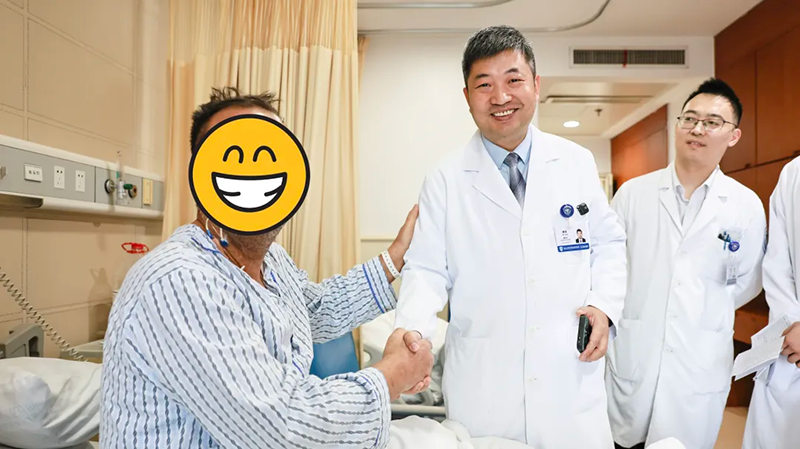
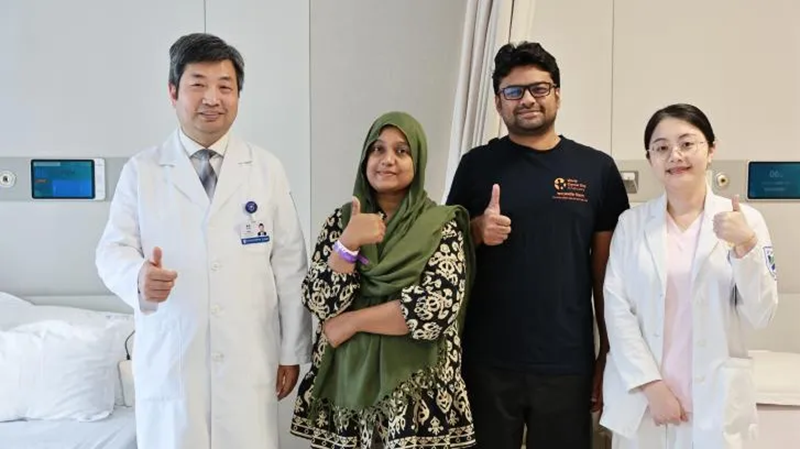
Recently, a female doctor from Bangladesh sought medical treatment abroad for liver metastases and, having heard of their reputation, sought out the team led by Chief Physician Tang Zhe at Zhejiang University Fourth Hospital. Less than a week later, another patient from Morocco traveled all the way from Africa to seek medical treatment abroad. The Moroccan patient has now been successfully discharged. This journey—spanning tens of thousands of li from Africa to China—has come to a successful conclusion at Zhejiang University Fourth Hospital.
To seek better chances of survival and access higher-quality surgical treatment plans, it has long been commonplace for overseas patients to come to Zhejiang University Fourth Hospital for medical care....... Dr. Tang Zhe noted that with the continuous development and widespread adoption of minimally invasive technologies—such as the Da Vinci robotic system—more patients like El Bari will be able to receive better treatment outcomes with less trauma and faster recovery in the future. “Medicine knows no borders; our goal is to ensure that every patient receives scientifically sound treatment.”
The Precision Technology Behind More Than 10,000 Ablation Procedures
Tang Zhe is one of the first doctors in China to perform radiofrequency ablation for liver tumors. In 1999, he performed Zhejiang Province’s first radiofrequency ablation procedure for a liver tumor. To date, he has performed more than 10,000 surgeries involving the resection and ablation of liver tumors.
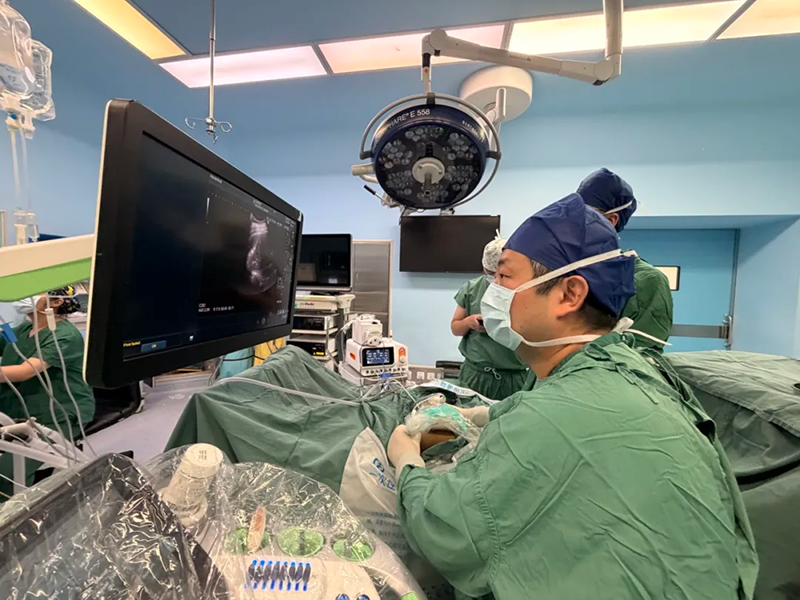
The Department of General Surgery at Zhejiang University Fourth Hospital possesses well-established radiofrequency ablation techniques and extensive clinical experience, ranking among the top in the country and leading the province in technical proficiency. In 2024, the department was designated as a Zhejiang Provincial Training Base for Tumor Ablation Techniques, marking recognition of its technical expertise in this field and providing a platform for training more physicians in this technology.
The team has been invited by countries such as Bangladesh and Uzbekistan to conduct surgical demonstrations overseas and has organized numerous international tumor ablation training courses domestically to provide technical training for physicians from countries participating in the “Belt and Road” initiative.
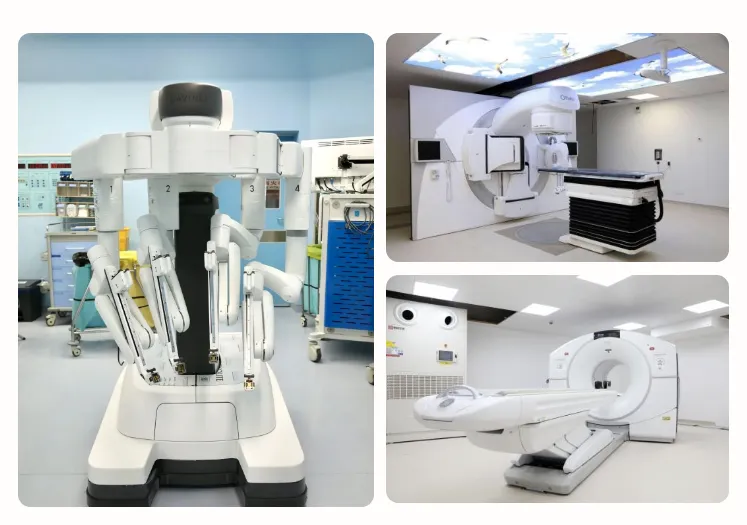
The liver is the most common site of hematogenous metastasis for colorectal cancer. The Fourth Affiliated Hospital of Zhejiang University is equipped with state-of-the-art facilities, including the Da Vinci robotic system, PET-CT, linear accelerators, and MRI scanners. Addressing clinical challenges associated with liver metastases from colorectal cancer—such as “late detection, low rates of curative resection, high rates of postoperative recurrence, and poor prognosis”—
“For most small liver tumors, ablation and surgical resection yield comparable results.”
Tang Zhe emphasized that, as a nationally restricted medical technology, radiofrequency ablation of tumors imposes very high requirements on both the physicians and hospitals performing the procedure. As a training center for tumor ablation technology both domestically and internationally, Zhejiang University Fourth Hospital aims to promote the standardized adoption of this technology, enabling more physicians to master it and allowing more patients to benefit.