“The Most Valuable Clinical Diagnosis Lesson”: A Medical Student’s Rare Disease Journey at ZJU4H
In early 2026, Gigi (pseudonym), a first‑year student from Sri Lanka at International School of Medicine, Zhejiang University posted a heartfelt thank‑you on social media: “During one of the hardest times in my life, I sincerely thank all the staff at ZJU4H for your kindness, professionalism, and unwavering care…”
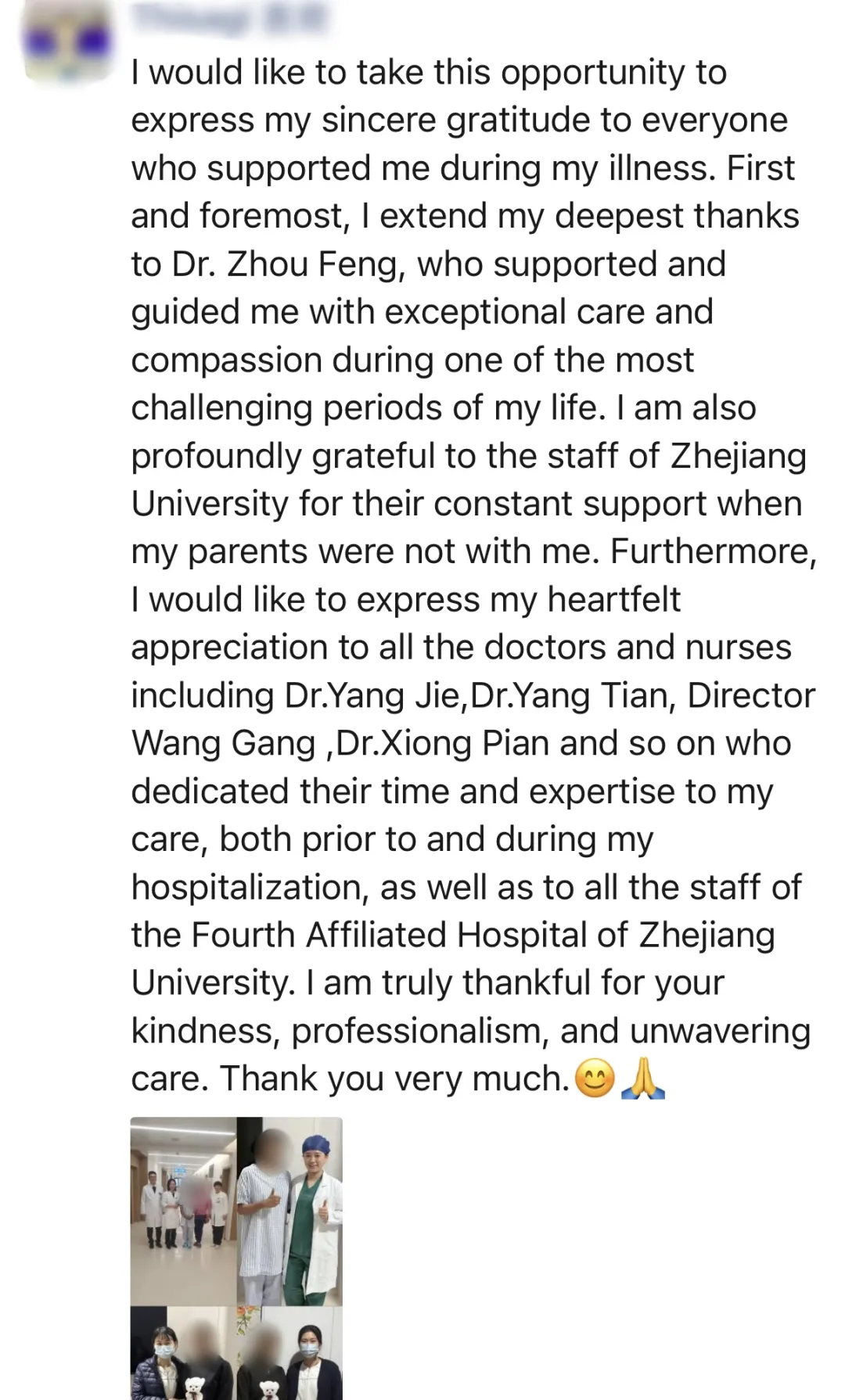
She had just been discharged after recovering from a fever of unknown origin that had lasted over two weeks. But behind this simple message lay a meticulous diagnostic “detective story” — involving four hospital‑wide multidisciplinary team (MDT) consultations and, ultimately, the diagnosis of a rare, self‑limiting disease that is often misdiagnosed.
The Mystery Begins
In early December 2025, Gigi developed a high fever (up to 39.3°C). Flu tests were negative, and antipyretics offered little relief. After two weeks, her inflammatory markers remained dangerously high. On December 19, she was admitted to the infectious disease department.
Her clinical instructor, anaesthesiologist Dr. Zhou Feng, immediately alerted the hospital leadership. That very afternoon, the hospital initiated its MDT mechanism, bringing together specialists from infectious diseases, haematology, rheumatology, and other fields to systematically investigate the cause.
Four MDT Consultations, Twelve Disciplines
As her fever spiked again, Gigi was transferred to the International Medical Centre. Abdominal CT revealed enlarged lymph nodes in the retroperitoneal space — a sign that her immune system was fighting something deep inside. The differential diagnosis pointed to three main possibilities: malignancy, atypical infection, or autoimmune disease.
Over the following days, the hospital conducted thorough screenings: haematology for blood cancers, rheumatology for autoimmune conditions, PET‑CT and echocardiography to rule out endocarditis, and more. Two joint consultations were even held with experts from affiliated hospitals in Hangzhou. A daily report system was established to track her progress.
On December 31, the fourth MDT meeting was convened. Led by the hospital’s Party Secretary and Dean, 12 departments — including infectious diseases, rheumatology, haematology, neurology, nephrology, cardiology, radiology, nuclear medicine, general surgery, respiratory medicine, and international medicine — reviewed her entire case.
Professor Wang Kai, a respiratory expert, proposed that the persistent fever might be drug‑related (“antibiotic fever”) and recommended stopping all antibiotics. Remarkably, her temperature normalised soon after. A lymph node biopsy was then performed, and on January 4, pathology confirmed the final diagnosis: Kikuchi disease (histiocytic necrotising lymphadenitis) — a rare, benign, self‑limiting condition predominantly seen in young Asian women, often mistaken for lymphoma or tuberculosis.
Recovery and Reflection
With a clear diagnosis, the team initiated a standardised hormone regimen. Gigi’s fever subsided, and she was discharged on January 6. The hospital provided an English discharge summary and a detailed follow‑up checklist. A week later, her inflammatory markers returned to normal, confirmed by a local hospital in Sri Lanka.
Reflecting on the experience, Gigi said: “This was the most valuable clinical diagnosis lesson I could ever have. As a medical student, I saw firsthand the rigour of diagnosis, the power of teamwork, and the importance of genuine care. Every test had a logical basis. I also experienced anxiety and fear as a patient — now I know how to better understand and support my own patients in the future.”
Multidisciplinary Care at ZJU4H
This case exemplifies ZJU4H’s deep commitment to MDT — a model that brings together experts from multiple specialties to develop holistic, individualised treatment plans. In 2025 alone, the hospital conducted over 350 inpatient MDT consultations, along with 13 specialised outpatient joint clinics. This integrated approach ensures that even the most complex cases receive efficient, accurate, and compassionate care — truly patient‑centred medicine.