After 35 Chemotherapy Sessions, He Refused to Give Up: A Colorectal Cancer Patient with Liver Metastasis Achieves NED Through Precision Surgery in China
For 60-year-old El Barri (pseudonym) from Morocco, never in his wildest dreams did he imagine that he would achieve the goal of "No Evidence of Disease" (NED) in Yiwu, China — thousands of miles away from home.
Diagnosed with colon cancer in 2024, El Barri underwent surgery and endured 35 rounds of chemotherapy. However, the cancer spread to his liver, with multiple metastatic tumors appearing. Faced with a life-threatening situation and being told that surgery was possible but unavailable locally, he made a resolute decision: to travel to China for hope.
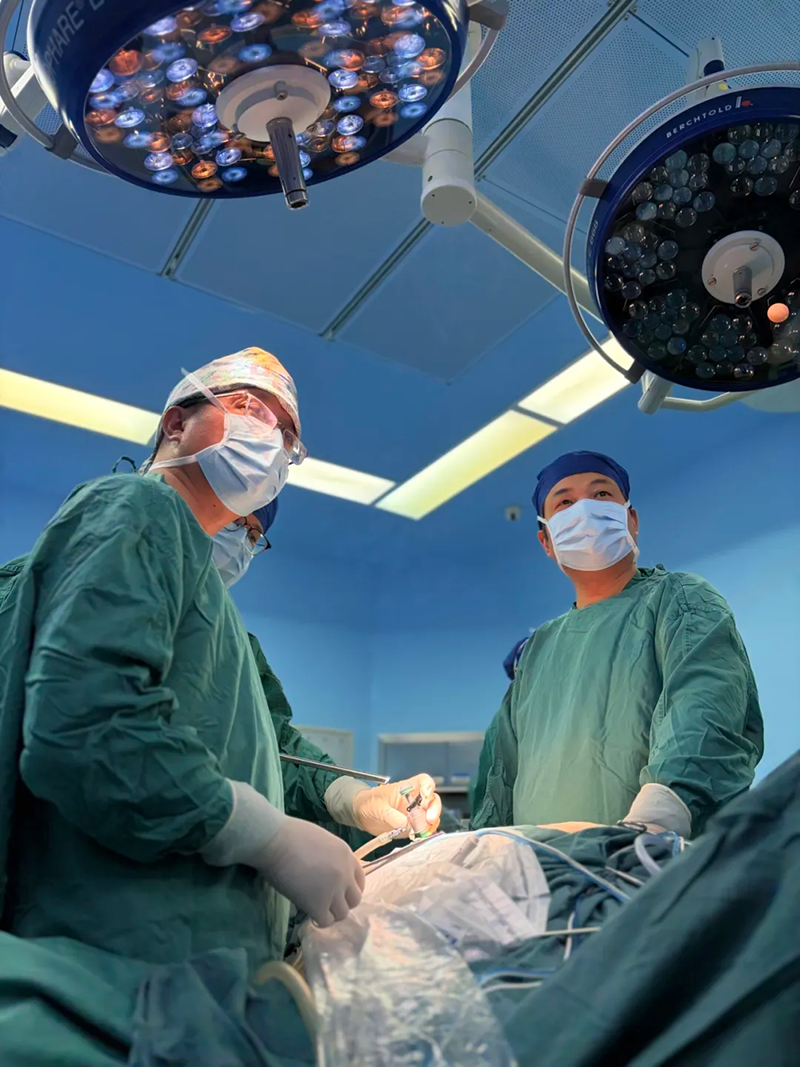
In March 2026, he arrived at the Fourth Affiliated Hospital, Zhejiang University School of Medicine (ZJU4H). Following a comprehensive evaluation, a multidisciplinary team (MDT) led by Professor Tang Zhe, Vice President and Director of the General Surgery Center, performed a combined procedure: laparoscopic liver resection plus ultrasound-guided radiofrequency ablation (RFA) — a minimally invasive technique that precisely "burns" deep-seated tumors without damaging healthy tissue.
The surgery lasted less than three hours, with almost no blood loss. El Barri recovered well and was discharged on the fifth day post-surgery.
"Chemotherapy is important, but when liver metastases are localized, achieving NED is the critical goal," said Professor Tang. RFA offers a less invasive alternative with comparable outcomes to surgical resection for small liver tumors — a technique that Professor Tang has been pioneering since 1999, with over 10,000 procedures performed.
For the patient's daughter, who runs a business in Yiwu, the choice to seek care in China was natural. "I know China has excellent medicine and world-class doctors. Every doctor and nurse here speaks English, which made everything so much easier."
From Africa to China, this journey across thousands of miles ended with renewed hope. As Professor Tang puts it: "Medicine knows no borders. Our goal is to give every patient the best possible care."