Tumors Near the Heart and Major Vessels… A Bangladeshi Female Doctor in Tears Crosses Borders to Seek Help at ZJU4H
In January 2026, Dr. Towhida Tasnim, a 31‑year‑old physician from Bangladesh, was diagnosed with liver cancer. Just two months later, a follow‑up PET‑CT revealed that the tumors had multiplied to five – and two were in life‑threatening locations: one adjacent to her heart, the other pressing against the inferior vena cava, the body’s main vein returning blood to the heart.
As a doctor herself, she knew the danger. If the tumors progressed, the vena cava could be compressed, causing severe leg swelling or even death. She and her husband, also a paediatrician, sought opinions in Bangladesh and Singapore – but were told surgery was impossible.
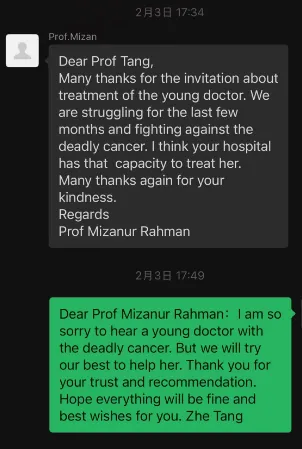
In their darkest hour, their mentor, Professor Mizanur Rahman – head of surgery at the National Cancer Institute of Bangladesh – urged them to contact Professor Tang Zhe, a renowned liver cancer specialist at the Fourth Affiliated Hospital of Zhejiang University School of Medicine (ZJU4H). Professor Tang had visited Bangladesh the previous year to demonstrate the country’s first‑ever liver ablation surgeries, impressing local colleagues with his expertise.
A WeChat message was sent to China. Professor Tang reviewed the scans and, with over 10,000 ablation procedures to his name – including thousands of high‑risk cases – he replied: “We will do our best. All will be well.”
Arranging the visa was the first hurdle. ZJU4H’s international office provided official appointment letters, smoothing the way. On February 28, the couple flew from Dhaka to Guangzhou, then on to Yiwu, arriving late at night. The next morning, they were admitted to the hospital’s international medical centre, and all pre‑operative tests were completed that same day.
A multidisciplinary team (MDT) of more than a dozen specialists – from general surgery, oncology, thoracic surgery, anaesthesia, radiology, and nuclear medicine – designed a personalised treatment plan. The strategy combined radiofrequency ablation (RFA) to “burn” the superficial tumours with laparoscopic resection for the high‑risk lesion near the heart – a two‑step approach that minimises bleeding and trauma.
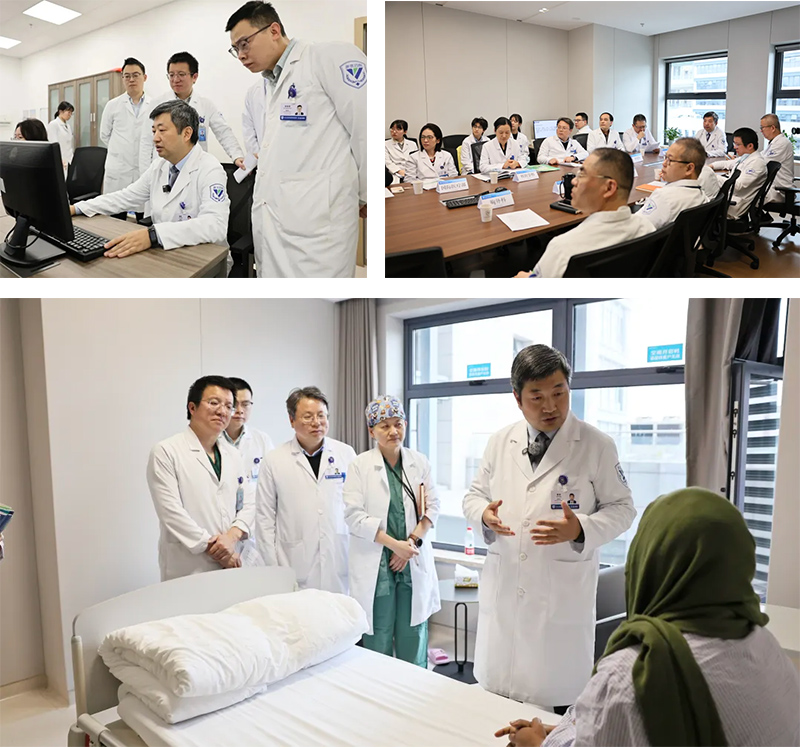
On March 3, the surgery was performed by Professor Tang’s team. It went smoothly: all tumours were eliminated with almost no blood loss. Professor Mizanur, anxiously waiting overseas, received a brief message: “Surgery successful.”
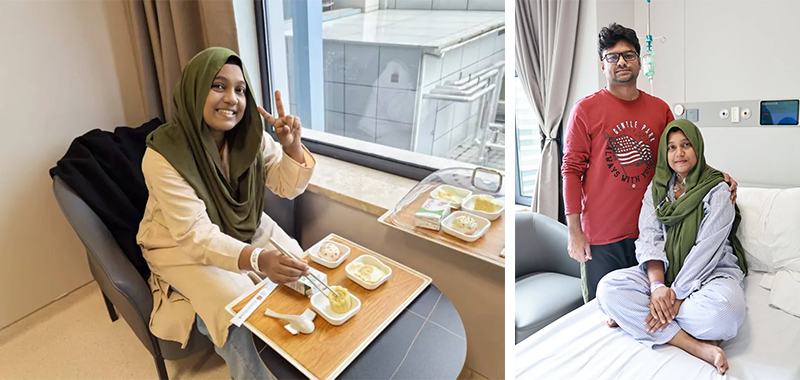
Recovery was swift. The hospital even arranged halal meals, and the couple was deeply touched by the warmth of the care. During their stay, they toured the facility and saw robotic surgical systems and advanced radiotherapy equipment. “Everything here – from IV lines to vital‑sign monitors – is ahead of what we have,” they said.
Just before discharge, the husband asked a surprising question: “Professor Tang, may I apply to be your postgraduate student?” Impressed by what they had witnessed, they saw not only a cure for her cancer, but also a new academic horizon.
ZJU4H is increasingly becoming a destination for international patients along the “Belt and Road.” In 2025, over 26,500 foreign patients visited the hospital. With a growing reputation for high‑tech, compassionate care, and a seamless international service system, the hospital is turning Yiwu into a global medical hub.
As Professor Tang puts it: “We have moved from following to leading. It is time to confidently share our technologies and skills with the world.”